
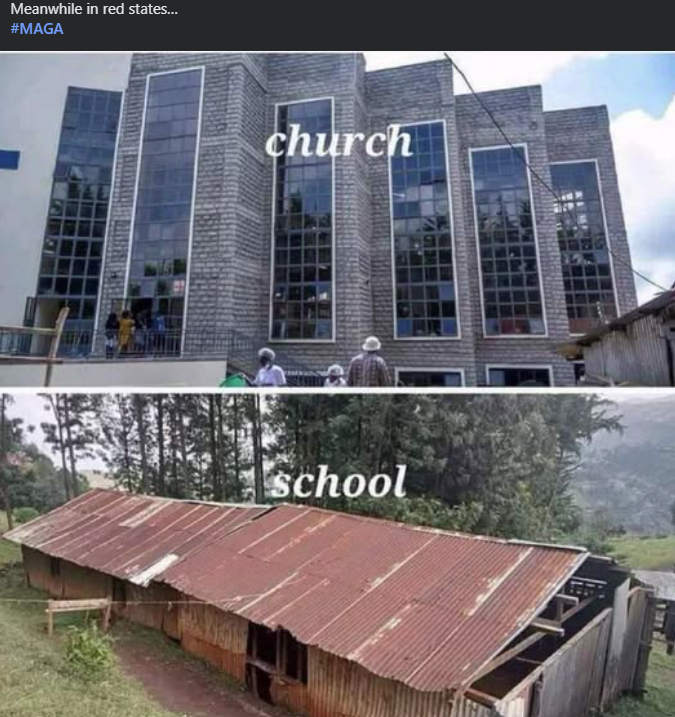
I saw this meme on Facebook, and if it reflects reality, then it is profoundly sad.
While the Bible Belt is home to some of the most vibrant and amazing churches in the country, the region structurally suffers from social maladies that other states largely avoid. For instance, the Bible Belt has the highest teenage birth rates in the nation. States like Mississippi, Arkansas, Louisiana, and Tennessee see teen birth rates that are double—or even triple—the rates of blue states like Massachusetts, New Hampshire, and California.
But the crisis isn’t limited to teenage pregnancy; the region also battles some of the highest rates of drug addiction and overdose deaths in the country, with West Virginia, Kentucky, and Tennessee consistently leading the CDC’s mortality metrics. Strangely enough, these same states also face disproportionately high rates of STD and STI transmission, including HIV and gonorrhea.
Beyond these immediate social crises lies the heavy, quiet engine driving them all: generational poverty. The Bible Belt overlaps significantly with regions of the country where low economic mobility is structurally locked in. In many of these rural and post-industrial communities, the American Dream has stalled; children born into lower-income families face statistically lower odds of climbing into higher income brackets compared to almost anywhere else in the nation. When a region suffers from a systemic lack of economic opportunity, underfunded municipal infrastructure, and a decaying local tax base, social maladies don’t just happen by accident—they become predictable byproducts of financial despair.
It makes you realize that this Promised Land isn’t exactly flowing with milk and honey. It’s wonderful for a region to be known for its deep Christian faith, but shouldn’t that spiritual devotion ultimately translate into better socio-economic, physical, and cultural conditions for the people living there?